

Charity marketing is a unique challenge. Unlike commercial businesses, charities must reach a diverse range of audience groups with various messages. These charity audiences may overlap, shift, or change over time. To illustrate this, let’s consider the story of Mark and a heart disease charity.
Mark first becomes involved with the charity when he participates in a 10k run. Later, when his mum develops heart disease, the charity supports her, and Mark decides to donate regularly as a token of gratitude. His running club is supporting a local event, where he volunteers as a marshal. Mark also buys cakes at the charity’s stall during the event. Unfortunately, Mark himself develops heart disease and becomes a beneficiary of the charity’s support. He eventually leaves a gift in his will to recognise the charity’s help over the year
As you can see, the same person can have multiple relationships with a charity at different times. Understanding these relationships is crucial for effective marketing.
How Commercial and Charity Audiences Differ
In most cases, a commercial business sells a product or service to its audience, who then benefit from it. This is relatively straightforward, as the product and marketing need to appeal to a specific group. For non-profits, it’s different. They need to reach two key groups: those who will benefit from their work and those who will support it. Support can come in various forms, such as donations, volunteering, or advocacy.
Charities may also have a transactional relationship with some audiences if they sell products or services. These groups will overlap to varying degrees depending on the organisation and its activities. Understanding all your audiences is the first step to effective marketing.
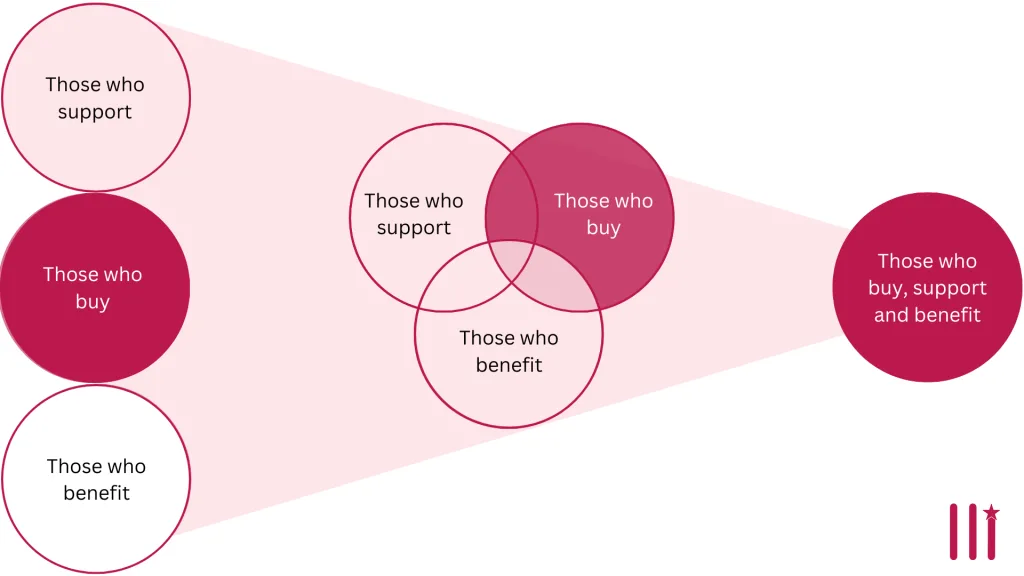
Those Who Benefit
Beneficiaries are the people who feel the positive impact of the charity’s activities. Not all charities have direct beneficiaries, or they might not always be human. For example, an environmental campaigning charity’s beneficiaries could be every living thing on the planet, but they are unlikely to have a meaningful relationship with them. Other charities might have a small number of beneficiaries with a deep, personal connection, such as a medical charity supporting people with a specific condition.
Beneficiaries may have the potential to become supporters, or they may not. Charities need to market their services to beneficiaries so they are aware of what the charity does and how they can benefit. This could be through third parties, such as healthcare professionals, or directly through community awareness activities.
Those Who Support
Supporters are likely to be a diverse group of people supporting the charity in different ways. Some potential supporter groups include:
- Donors: People who donate money to the charity, ranging from small, one-time donations to large, regular contributions.
- Legators: Individuals who leave a gift in their will for the charity.
- Members: People who pay a set amount to become members and may receive certain benefits in return.
- Volunteers: Individuals who donate their time and expertise to support the cause, either regularly or for specific tasks.
- Participants: People who take part in events organized to raise money for the charity.
- Advocates: Individuals who support the charity by raising its awareness and profile.
These groups may be highly cause-driven or not at all. Understanding the motivations of different groups is essential for developing an effective marketing approach. One size definitely doesn’t fit all.
Those Who Buy
If a charity engages in commercial activities, it will also have customers who buy their products or services. Customers might also behave as participants or members. For example, Mark’s first interaction with the charity was as a participant in a running event. While this supported the charity financially, his primary motivation was to take part in the most convenient race. Similarly, people might buy a membership to an organisation for the benefits offered rather than seeing it as a donation to the cause.
Why it’s important to know your charity audiences
Charities often have a wide variety of audience groups. By understanding who they are and why you want to engage with them, you can prioritise your marketing efforts effectively. Knowing your audiences helps you make better decisions about your marketing strategies, ensuring your time, effort, and money are spent wisely.
In conclusion, charity marketing requires a deep understanding of your diverse audience groups. By recognising the different relationships people can have with your charity and tailoring your marketing approach accordingly, you can engage with your audiences more meaningfully and achieve your goals.
Dive Deeper
Watch the full YouTube video for a deeper look into this topic.
Never miss out
Sign up to our weekly email – you’ll never get spam!